The first time I paid for knowledge I paid with my body I was young, new to a country where I did not speak the language, and I needed to learn the English alphabet. Not words. Not sentences. Just the letters. Someone told me about a private teacher a tutor who could give me one‑on‑one lessons. The price was simple and devastating: each one‑hour lesson cost me one full day of my labor. One day of working with my hands, carrying heavy things, earning money that would go directly into someone else’s pocket in exchange for letters.
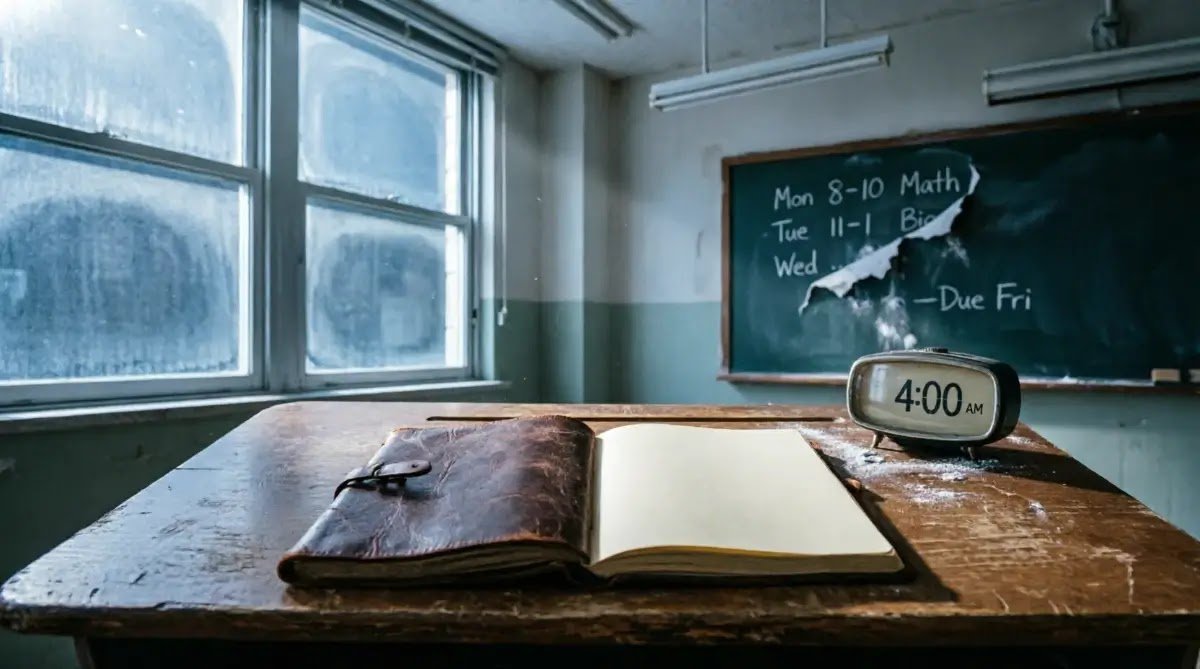
I sat in a small room with the tutor. He had a whiteboard. He asked me what I already knew about the English alphabet. I told him I knew the capital letter “A” only the big one. I did not yet know that the same letter had a smaller version, a lowercase “a,” that looked completely different. He nodded and began to write on the whiteboard: A, B, C, D, E, F. Capital letters, one after another, in neat rows. He taught me their names. He taught me their sounds. The hour passed.
Then he told me something that stopped my heart. The small letters the lowercase versions of the same alphabet would be taught in the next lesson. And that next lesson would cost me another full day of my labor.
I remember walking home that day with a strange feeling in my chest. It was not anger. It was not frustration. It was a question that had planted itself in my mind and would not leave. What if there is another way?
I had just traded a full day of my life for six capital letters. And I knew, in that moment, that I could not afford to learn the rest of the alphabet this way let alone a whole language.
The tutor was not a bad man. He was simply doing what tutors do selling his knowledge at a price the market would bear. He had spent years learning English, and now he was offering that knowledge to people like me who needed it. The price was fair to him. It was devastating to me. Each hour I spent with him meant one less day of wages to support myself, to buy food, to pay for shelter. The math was impossible.
But that experience taught me something invaluable. It taught me that knowledge has a cost, but that cost does not always have to be paid in money. It can be paid in time. In effort. In the willingness to search for alternatives. The money I spent on those lessons was gone forever. But the lesson I learned from the experience that there is always another way has paid dividends for the rest of my life.
I am grateful to that tutor now. Not for the letters he taught me those I could have learned anywhere. But for the question he planted in my mind. What if there is another way? That question set me on a path that has taken me further than any classroom ever could.
The tutor’s whiteboard stayed in my mind for years. Not because of what he wrote on it, but because of what he did not write. The small letters. The lowercase alphabet that was promised for the next lesson. I eventually learned those small letters on my own, without paying another day of my labor. I found a free resource online and practiced until I knew them as well as the capitals.
That small victory was enormous in its impact. It proved to me that I could learn without a middleman. That I could take control of my own education. That the power to learn was not something I had to buy it was something I already possessed, waiting to be used.
The feeling of learning something on my own, without trading a day of hard labor for an hour of instruction, was a revelation. It was the feeling of agency. Of power. Of freedom. And once I had tasted that freedom, I could never go back to the old way of thinking.
The World That Opened When I Started Looking
When I was a child in my village I believed there was only one way to learn anything practical. You had to go to a physical place. You had to sit in a room with a teacher. You had to pay a price that was often too high for people like my family. That was the rule, and I had never seen it broken.
But when I moved abroad, I began to see something different. I saw people learning things on their own. I saw computers and phones being used not just for communication, but for education. I saw free resources videos, articles, courses that anyone could access. At first, I could not believe it. It felt like a door had opened that I had been told my whole life was locked.
The first time I searched for “learn English alphabet” on a phone with a cracked screen and a weak internet connection, I found dozens of free resources. Videos that showed each letter. Audio files that pronounced each sound. Practice exercises that let me repeat as many times as I needed. No tutor. No whiteboard. No trading a day of my labor for an hour of instruction. Just me, a screen, and the willingness to learn.
That moment changed everything not because the resources were magical. Because I realized that the only person who truly wanted me to learn was me. And if I was willing to take responsibility for that learning, I did not need to wait for someone else to teach me. I could become my own teacher.
The shift from believing that learning required a physical school to understanding that it could happen anywhere, anytime, was not instant. It was gradual, like the sunrise. At first, just a crack of light. Then more. Then the full brightness of possibility.
I began to explore. I found websites that taught English for free. I found apps that let me practice vocabulary during my breaks at work. I found videos where native speakers explained grammar in simple terms. The world of learning was opening up before me, and I was like a child in a library, not knowing which book to pick up first.
But with that freedom came a new weight. When you are responsible for your own learning, you are also responsible for your own progress. There is no teacher to blame if you fail. No curriculum to hide behind. Just you and your commitment. That weight was heavy at first. But over time, I learned to carry it. And eventually, I learned to love it. Because it meant that my learning was truly mine.
The cracked screen of my phone became a window to the world. Through that small, damaged rectangle, I could access more knowledge than any library I had ever seen. The irony was not lost on me. The boy who grew up believing that learning required expensive schools now held a device that could teach him almost anything for free.
But the phone was only a tool. It was not a teacher. The real teacher was the decision I made every day to use it for growth instead of distraction. That decision made again and again, morning after morning is what separates those who benefit from the digital age from those who are consumed by it.
I learned to treat my phone as a classroom, not a playground. I deleted apps that wasted my time. I installed apps that built my skills. I curated my digital environment the same way I would curate a physical study space. And that curation made all the difference.
The realization that I could become my own teacher was only the beginning. I still had to figure out what to learn, how to learn it, and how to keep going when the initial excitement faded that journey from passive consumer to active learner is the subject of everything that follows.
The Freedom and the Chaos of Self‑Education
Once I understood that I could learn anything on my own, I became hungry. I searched for courses on languages, on skills, on anything that could help me build a better life. And I found them. Thousands of them. More than I could ever complete in a lifetime.
But that abundance brought a new problem. How do you choose? How do you know which course is worth your time and which is just a beautiful promise with no substance? I fell into the trap more than once. I signed up for courses that promised fluency in weeks, mastery in months. I spent money I did not have on programs that delivered very little. I learned, through disappointment, that not everything that shines is gold.
The online world of self‑education is a marketplace. Some sellers are honest. Some are not. Some courses are built by people who genuinely want to help. Others are built by people who want to profit from your desire to improve. Learning to tell the difference is itself a skill one that can only be gained through experience.
I learned to ask questions before committing to any course. Who made this? What have they achieved themselves? Are the promises realistic, or do they sound too good to be true? What do other learners say? These questions became my filter. And over time, I became better at finding the resources that genuinely helped.
Self‑education is not just about learning a subject. It is about learning how to learn and that includes learning how to choose what to learn from.
The online courses I found ranged from excellent to useless. Some were created by passionate teachers who genuinely wanted to share their knowledge. Others were created by marketers who had never taught anything in their lives but knew how to write a compelling sales page. Learning to tell the difference was a skill I had to develop through trial and error.
I remember one course I bought that promised to make me fluent in three months. The sales page was beautiful. The testimonials were glowing. The price was high, but the promise was higher. I paid, I started, and within two weeks I realized the course was shallow. It covered the basics and then repeated them, with no depth, no real practice, no path to fluency. I had been sold a dream, not an education.
That experience could have made me bitter. Instead, it made me smarter. I learned to look beyond the marketing. To check who was behind the course. To look for independent reviews. To test free samples before committing money. These habits have saved me countless hours and dollars since.
The marketplace of self‑education is like any marketplace. There are treasures and there are traps. The skill of discernment is one of the most valuable things you can learn.
One of the most important lessons I learned about online courses is that the most expensive ones are not always the best. Some of the most valuable resources I have ever used were completely free. Created by people who simply wanted to share what they knew. The price tag is not a reliable indicator of quality.
Conversely, some of the most expensive courses I have seen were little more than repackaged free information, sold at a premium to people who did not know where to look. The marketing was impressive, but the content was not.
I learned to value substance over style. A course taught by a passionate expert with a simple website and no advertising budget could be far more valuable than a glossy program with professional videos and a team of marketers behind it. The key is to look past the surface and judge what is actually being taught.
This discernment applies not just to courses, but to all learning resources. Books, articles, videos, podcasts the same principles apply. Who created this? What are their credentials? What do other learners say? Is the information actionable, or is it just entertainment disguised as education?
I also found incredible value in a simple method that taught me how to listen to a foreign language and train my ear to understand native speakers that method cost nothing and became one of the most powerful tools in my self‑education arsenal.
Formal Education and the Missing Piece
I want to say something clearly, because it is often misunderstood. I am not against formal education. School gave me things I could not have given myself at that age. Structure. Basic literacy. Exposure to ideas I would not have encountered on my own. For many people, formal education is a foundation a necessary starting point.
But formal education is not the complete picture. It cannot be, because learning does not end when you leave the classroom. The world changes. Skills become outdated. New opportunities appear that did not exist when you were in school. If you stop learning the moment you receive a certificate, you stop growing.
Self‑education is what happens after the classroom door closes. It is what happens when you decide, on your own, that you want to know more, do more, become more. It is not a replacement for school. It is the continuation. And in the twenty‑first century, it is more accessible than ever before.
The resources are in your pocket. The only question is whether you will use them. And that question the question of motivation, of purpose, of direction is the hardest part of self‑education.
Formal education gave me structure. It gave me a foundation of basic knowledge that I still use today. I am grateful for the years I spent in school, however limited they were. But school also taught me something else, though it was not in the curriculum. It taught me that learning could be passive that you could sit in a chair, listen to a teacher, and absorb information without truly engaging with it.
Self‑education is different it demands engagement. It demands that you ask questions, seek answers, and apply what you learn. It demands that you take ownership. And that ownership, once you embrace it, changes not just what you know, but who you are.
The person who learns passively will forget most of what they are taught. The person who learns actively who searches, practices, struggles, and overcomes will remember. Because the struggle itself burns the knowledge into memory. The effort is the proof that the learning matters.
Formal education gave me many things, but the most important thing it gave me was the realization that learning could continue beyond it. The school doors closed, but the learning did not have to. In fact, the most valuable learning of my life happened after I left the classroom.
This is not a criticism of school. It is a recognition of its limits. A school can teach you the basics. It can introduce you to ideas. It can give you a foundation. But it cannot learn for you. Only you can do that. And the sooner you take responsibility for your own learning, the sooner you begin to grow in ways that no curriculum could ever prescribe.
The twenty‑first century has made self‑education more accessible than ever before. But accessibility is not the same as ease. The resources are available, but the discipline, the purpose, and the persistence must come from within. And that inner drive is what separates those who thrive from those who merely dream.
I learned early on that being able to speak a language aloud even while practicing alone was essential. I used a mirror to watch my mouth form the sounds a technique that turned my private practice into a powerful tool for self‑correction.
The Hardest Part of Being Your Own Teacher
When you are your own teacher, you have no one to set the curriculum. No one to tell you what to learn next. No one to test you and tell you if you are progressing. That freedom is wonderful but it is also dangerous.
Without a clear purpose, you can drift. You can jump from one topic to another, never going deep on anything. You can spend hours watching videos and feel like you are learning, when in reality you are just consuming. You can mistake information for skill.
I learned that the first and most important step in self‑education is defining your purpose. Why do you want to learn this? What do you want to be able to do? Who do you want to serve? Without clear answers to these questions, the resources will overwhelm you. With clear answers, the resources will serve you.
Once your purpose is defined, the next step is designing your path. What do you need to learn first? What comes next? How will you practice? How will you know when you are ready to move on? These are the questions that a traditional teacher would answer for you. In self‑education, you must answer them yourself. And that requires honesty, patience, and a willingness to adjust when something is not working.
The third step is measurement. How do you know you are improving? In school, tests and grades provide that feedback. In self‑education, you must create your own measures. Can you do something today that you could not do yesterday? Can you explain a concept clearly to someone else? Can you apply what you have learned in a real situation? These are the real tests.
Purpose, path, and measurement these are the three pillars of self‑education. Without them, you are lost in an ocean of resources. With them, you are the captain of your own learning.
Designing your own path is not something you do once. It is something you revisit constantly. What made sense at the beginning of your journey may no longer serve you halfway through. The path must evolve as you evolve. That requires humility the willingness to admit that you may have made a wrong turn, and the flexibility to correct it.
I have changed my learning path many times. I have abandoned methods that were not working. I have switched resources when I outgrew them. I have redefined my goals as I learned more about what was possible. This flexibility is not a sign of weakness. It is a sign of wisdom. The person who clings to a plan that is not working is not disciplined; they are stubborn. The person who adjusts is the one who reaches the destination.
Measurement, too, is something I had to learn. In the beginning, I measured my progress by how many videos I watched or how many pages I read. But consumption is not learning. Watching a video is not the same as understanding its content. Reading a page is not the same as remembering its lessons.
I learned to measure progress by what I could do. Could I have a conversation that I could not have a month ago? Could I write a paragraph that was clearer than the one I wrote before? Could I understand a native speaker speaking at full speed? These were real measures. They did not lie. And they gave me a far more accurate picture of my growth than any test score ever could.
Finding purpose in self‑education is not a one‑time event. It is a practice. Every morning, I remind myself why I am learning what I am learning. I reconnect with the reason that started me on the path. That daily reminder keeps me going when the work feels hard or the progress feels slow.
Your purpose does not need to be grand. It does not need to impress anyone else. It only needs to be real. It only needs to be yours. My purpose was to learn languages so I could connect with more people and serve them better. That purpose has carried me through thousands of hours of study. It has never let me down.
I encourage everyone who is starting their own self‑education journey to write down their purpose. Keep it somewhere visible. Return to it every day. Because when the motivation fades—and it will fade your purpose will be the light that guides you forward.
Designing the path is equally important. Without a path, you wander. You start many things and finish none. You accumulate certificates without building skills. A good path is clear, sequential, and realistic. It tells you what to learn first, what to learn next, and how to practice in between. It is not set in stone—it can and should change as you learn more but it provides the structure that self‑education often lacks.
Measurement in self‑education is not about comparing yourself to others. It is about comparing yourself to your past self. The only question that matters is: am I better today than I was yesterday? Am I closer to my goal than I was a month ago? These are the measures that keep you grounded and motivated.
I learned to keep a simple log of my progress. Not a complex system. Just a few lines each day about what I practiced and how it felt. Over time, that log became a record of my growth. When I felt stuck, I could look back and see how far I had come. The evidence was there, in my own handwriting, undeniable.
That log is one of the most valuable things I own. It is not a certificate. It is not a diploma. It is something better: a personal history of becoming. And anyone can create one.
I also learned that purpose can be found even when you feel completely lost the process of asking yourself what truly matters and being honest about the answer is the first step on any self‑directed path.
The Long Game That Never Ends
Self‑education is not a sprint. It is not a course you finish and put on your shelf. It is a way of life. The people who succeed at it are not the ones who learn the fastest. They are the ones who keep learning, year after year, long after the initial excitement has faded.
I am still learning. Every day. The alphabet that once cost me days of my labor is now something I can teach to someone else in minutes. But there are still things I do not know. Skills I have not yet built. Languages I have not yet learned. And that is not a failure. It is an invitation.
The beauty of self‑education is that it never ends. There is always a new mountain to climb, a new skill to acquire, a new way to grow. And the person you become through that ongoing process is worth more than any certificate or title.
Self‑education is not a destination. It is a direction you choose every day.
The long game of self‑education requires something that is increasingly rare: patience. In a world of instant gratification, the willingness to wait for results is a superpower. Most people give up on their learning goals within weeks. They expect fluency in months, mastery in a year. When the results do not come on their timeline, they conclude that they are not capable.
But they are capable. They just need more time. The seed takes time to germinate. The plant takes time to grow. The fruit takes time to ripen. You cannot rush any of these stages. You can only tend the soil, water the seed, and wait.
I learned to wait. I learned to trust the process. I learned that the hours I invested were not disappearing they were accumulating, silently, invisibly, preparing to break through the surface when the time was right. And when the breakthrough came, it was worth every moment of waiting.
The long game is the only game worth playing. Everything else is a distraction dressed as a shortcut.
I also learned that self‑education is not a lonely journey, even though much of the work is done alone. There are communities of learners everywhere online forums, social media groups, local meetups. Finding these communities can provide the support and accountability that are missing when you are your own teacher. Knowing that others are on the same path makes the long journey feel less solitary.
The long game also requires resilience. There will be days when you do not want to learn. Days when the book feels heavy and the screen feels distant and the whole project seems pointless. Those days are not signs that you should quit. They are signs that you are human.
On those days, I do not demand much of myself. I do not try to learn something new or master a difficult concept. I simply show up. I open the book. I watch one video. I practice one exercise. The action itself is the victory. And often, that small action leads to another, and another, until the resistance dissolves and the learning continues.
The ability to show up on the hard days is what separates those who achieve their goals from those who only talk about them. And that ability is not something you are born with. It is something you build, one hard day at a time.
The long game is won not by the fastest sprinters, but by the steady walkers who refuse to stop.
The long game also requires celebration. When you reach a milestone a language milestone, a skill milestone, any achievement pause and acknowledge it. The invisible hours deserve recognition, even if only from yourself.
One of the keys to staying on the path was learning how to choose my first language with care making a decision that aligned with my purpose rather than following trends or pressure hat single choice set the direction for everything that followed.
I also learned that motivation is unreliable. It comes and goes like weather. What endures is the commitment to a process that you trust a process that doesn’t depend on feeling inspired I found that the alternative to motivation was a deeper kind of discipline, and it changed everything.
The Digital Age and the Distraction Trap
We live in an age of infinite information. Every fact, every skill, every subject is available at the press of a button. This is a miracle that previous generations could not have imagined. But it comes with a shadow.
The shadow is distraction. The same device that gives you access to the world’s knowledge also gives you access to endless entertainment, social media, and notifications designed to hijack your attention. The battle for your focus is constant, and the companies behind these distractions spend billions of dollars to win it.
Self‑education in the digital age requires something that was not necessary before: the deliberate protection of your attention. You must become the guardian of your own focus. You must decide, in advance, what you will pay attention to and what you will ignore. This is not easy. It requires discipline and intention. But it is essential.
I learned to set boundaries. I put my phone on silent mode when I was studying. I used apps that blocked distracting websites. I scheduled specific times for learning and protected those times from interruption. These small habits, accumulated over years, created a space where deep learning could happen.
The digital age has made self‑education possible for billions of people. But it has also made distraction possible for all of them. The difference between those who learn and those who scroll is not intelligence. It is intention.
The distraction trap is not just about social media. It is also about the sheer volume of learning resources available. When there are a thousand courses on a single topic, choosing one can feel impossible. The fear of making the wrong choice can lead to making no choice at all. This is the paradox of abundance: too many options can be as limiting as too few.
I learned to overcome this paralysis by adopting a simple rule: choose one resource and commit to it for a set period. Do not compare it to other resources while you are using it. Do not wonder if something better is out there. Give it your full attention for a month, or until you complete it. Then, and only then, evaluate whether to continue or switch.
This rule saved me from endless browsing and restarting. It gave me the focus I needed to actually learn, rather than just prepare to learn. And it is a rule I recommend to anyone who feels overwhelmed by the choices available to them.
I also found it helpful to give myself permission to begin to stop waiting for the perfect moment or the perfect resource and just take the first small step. That permission, granted to myself, was more powerful than any external validation.
Another tool that kept me anchored was the simple act of charting my own learning route. When I stopped looking for someone else’s map and started drawing my own, I felt a sense of ownership that transformed my daily study into something personal and meaningful.
The Window That Never Closes
I think often about that whiteboard. The capital letters written in neat rows. The promise of lowercase letters that would cost me another full day of my labor. I am grateful for that moment now, because it opened a window that has never closed.
The window of self‑education is open to anyone. It does not check your background. It does not ask for your credentials. It does not demand payment. It only asks that you look through it, see the possibilities on the other side, and decide to step forward.
The resources are there. The path is waiting. The only missing piece is your decision to begin. And once you begin, you will discover what I discovered: that the person who learns on their own, for their own reasons, with their own discipline, becomes unstoppable.
The window is open. All you have to do is look through it and take the first step.
The journey of self‑education is not always smooth. There are plateaus where nothing seems to improve. There are moments of doubt when you question whether you are on the right path. There are setbacks that make you feel like you are starting over. These are not failures. They are part of the process.
I have experienced all of them. I have felt the frustration of a plateau that lasted for weeks. I have doubted my ability to learn a new language or a new skill. I have faced setbacks that made me question everything. But I kept going. Not because I was certain of success. Because I was certain that quitting would guarantee failure.
The difference between those who succeed at self‑education and those who give up is not talent. It is persistence. It is the willingness to keep walking when the path is unclear. It is the refusal to let a bad day become a bad week, or a bad week become a permanent stop.
The window is always open. The only question is whether you will keep looking through it, day after day, until the view becomes your reality.
I am still looking through that window. Every day. And what I see on the other side is more than I ever imagined when I sat in that small room, trading a day of my labor for an hour of letters. The view is worth it. The journey is worth it. And the window is open for you, too.
Self‑education is not a replacement for the good things that formal schooling can offer. It is the continuation. It is what happens when you decide that your growth will not be limited by a calendar or a curriculum. And in a world where knowledge is everywhere, the only barrier left is the decision to begin.
There is a quote from someone I once met that I carry with me still: “I could not afford the school, so I became the school.” That is the heart of self‑education. Not a rejection of institutions, but an embrace of personal responsibility. And that embrace, once you accept it, will carry you further than you ever thought possible.